 |
EASTERN PHANTASIA CONTEMPORARY EASTERN FOLK MUSIC ENSEMBLE |
 |
 |
 |
|
|
|
EASTERN PHANTASIA CONTEMPORARY EASTERN FOLK MUSIC ENSEMBLE |
|
|
|
|
|
 Traditional Chinese Instruments
Dizi: a transverse flute widely used in many genres of Chinese folk music, Chinese opera, and the modern Chinese orchestra. Traditionally, the dizi has also been popular among the Chinese common people as it is simple to make and easy to carry. | 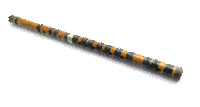 |
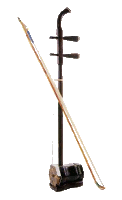
Huqin: an instrument family that consists of two-stringed bowed instruments used by various ethnic groups of China.
|
 |
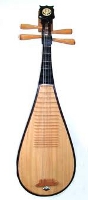
The pipa (Chinese lute), is a four-stringed Chinese musical instrument which has a pear-shaped wooden body and belongs to the plucking family. Pipa first appeared in the Qin Dynasty (221-206 BCE) and was developed during the Han Dynasty. It is one of the most popular Chinese instruments and has been played for nearly 2000 years in China. The name “Pipa” is made up of two Chinese syllables (“pi” and “pa”) which are the two most common ways of playing this instrument. “Pi” is to push the fingers of the right hand from right to left, thus more than one finger can be used at a time striking multiple notes, and “pa” is to pull the thumb of the right hand from left to right, in the opposite direction. |
|
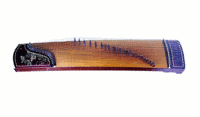
Zheng (guzheng): a plucked zither with 18–23 or more strings and movable bridges. The zheng rests on two pedestals and is played using 3 to 4 imitation fingernails. On the right side of the bridges, both hands pluck the strings and on the left side, the left fingers bend the strings to change pitch or to provide embellishment. Different techniques of playing the guzheng can create sounds that can evoke the sense of a cascading waterfall, thunder, horses' hooves or the scenic countryside. |
 |


